Cambodia River Cruises
Choose where you sleep
- RV Jayavarman
- RV Mekong Dawn
- RV Mekong Pandaw
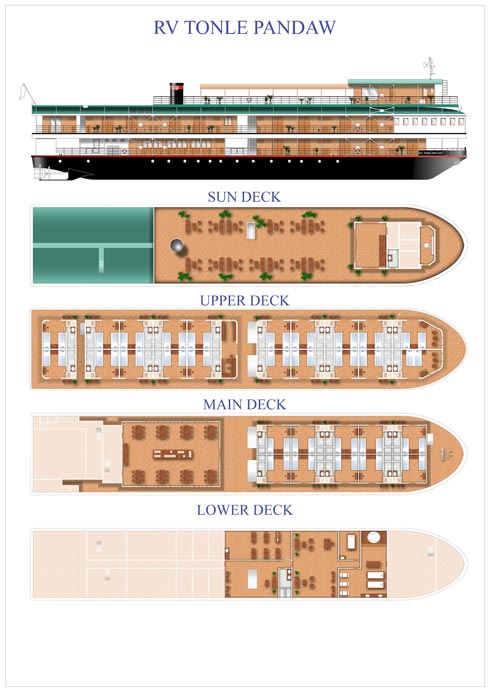
- RV Tonle Pandaw
- RV Toum Tiou
- RV Toum Tiou II
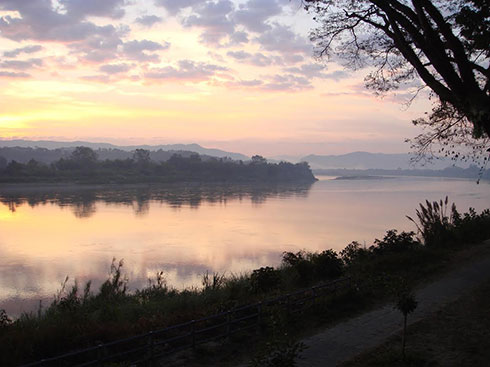
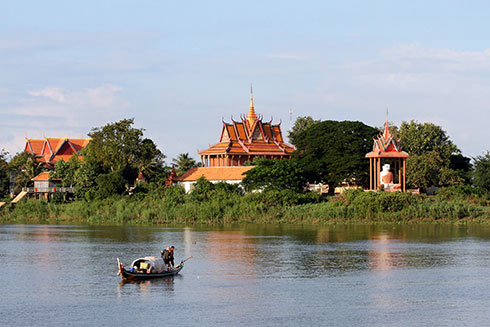
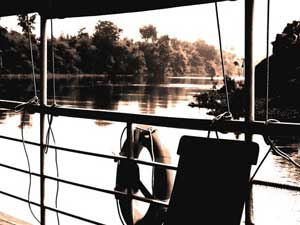 The Great Lake that forms the centrepiece of Cambodia, the Tonle Sap, is the largest freshwater lake in South East Asia and an ecological hotspot that has been designated an UNESCO biosphere. Swelling by a factor of up to six during the monsoon season, the river that connects it to the Mekong River at Phnom Penh, the Tonle Sap River, is the only river in the world that reverses is direction of flow as the heavy rains, swollen by melting snow from the Himalayas, tries to escape to the South China Sea through the Mekong Delta.
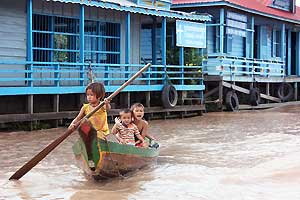 The Tonle Sap, together with the mighty Mekong River, define the lives of the Khmer people, providing the irrigation, needed to grow rice, and the fish that provides the protein. Without these, the great Angkor kingdom could not have flourished, and what was once the world's largest city, Angkor Thom, perched on the northeast side of the great lake next to the present day city of Siem Reap, would never have been built.
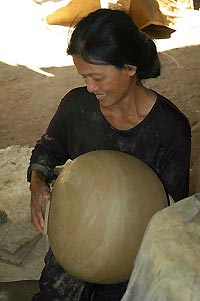 The first half of this colourful river journeybetween Cambodia's current capital and Siem Reap, depending on the direction of travel, follows the Tonle Sap river from Phnom Penh to Kampong Chhnang, one of the largest fishing ports on the Tonle Sap. This area is famous for its hand made pottery, unchanged in style for centuries, a cottage industry that produces sufficient quantities to supply the entire country. Wherever you go in Cambodia, you are likely to stumble across a cow cart, laden with the wares of Kampong Chhnang, as it pursues upon a sales trip that could last up to 3 months.
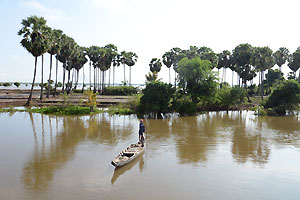 Other famous products not to be overlooked, for which this area is renowned, come from the Thnot tree (sugar palm tree), an iconic feature of the Cambodian landscape that abound in the area: palm sugar, a mellow tasting, caramel-coloured sugar sold in large cakes, and palm wine, the favourite tipple of rural folk.
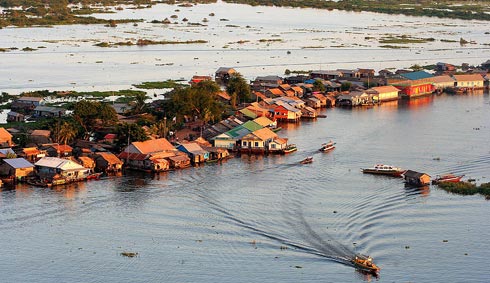 Sailing on to the Great Lake itself you come across Kôh Chen, an island whose village inhabitants specialise in silver and copper smithing. They craft ornamental items including the delicately engraved tropical fruits used in traditional ceremonies at the pagoda or for marriages.
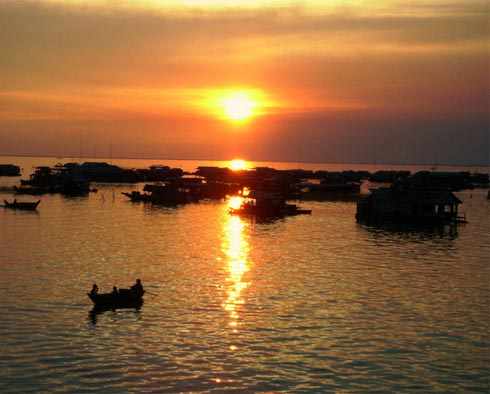
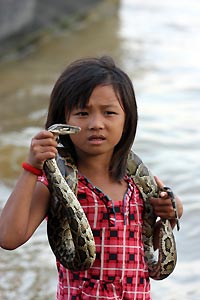 The floating village of Chnok Trou is a real floating village with a large population of Vietnamese fishermen. Almost totally overlooked by tourists because of its remoteness and difficult access, the village is completely self-sufficient. Floating school, factories to make ice for fish preservation, church, pagoda, service stations, pigsty, stores, boat or television repair shops, video club, karaoke bar, police station... all except for car showrooms… everything is on the water. All trades are represented and everybody from children to grandparents travel by boat through the network of canals that cross the towns. Fishing, of course, is the primary industry.
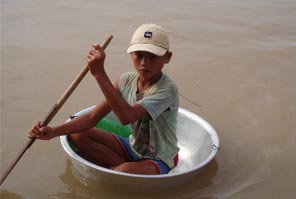 Depending on water levels in the lake and rivers, it may be possible to visit Cambodia's second largest city, the elegant, French colonial-era town of Battambang to the west of the lake. Undergoing an artistic renaissance, Battambang is the proud home to many artists and to the Phare Ponleu Selpak, a talented NGO supported circus troupe,
This river cruise is an ideal way to explore hidden parts of Cambodia at a deliciously relaxed pace, while travelling between the must-see destinations of Angkor Wat and the capital, Phnom Penh.
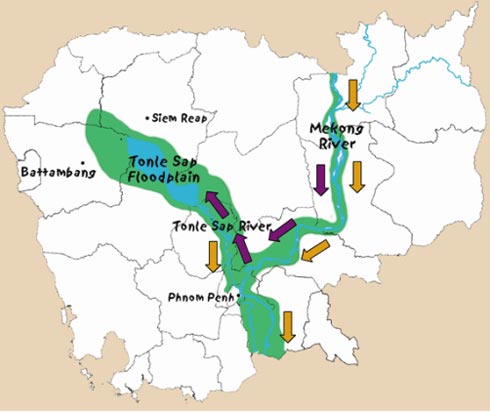
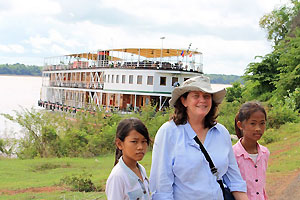 Pandaw cruises offer 4 and 3 night cruises between Phnom Penh and Siem Reap, home to the famous Angkor Wat. During high water season the route will take you across the great Tonle Sap lake. When water levels are low, typically between January and July, the ships will cruise further up the Mekong River to Kampong Cham, transferring guests to or from Siem reap by road from there.
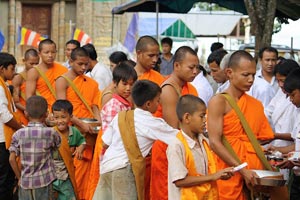 All cruises include several village stops where guests can disembark to explore and mingle with the locals, visits to temples, including one hill-top pre-Angkorian pagoda, and a tour of the prime sights of Phnom Penh, Cambodia's capital - all optional.
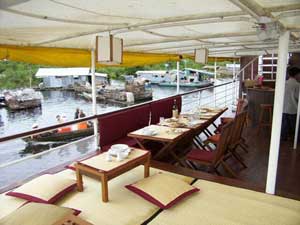 Both Toum Tiou boats, the Toum Tiou and the Toum Tiou II, offer 3 day, 2 night cruises between Phnom Penh and the ancient capital of Angkor at Siem Reap, overnighting at Kampong Chhnang and Chnok Tru en route.
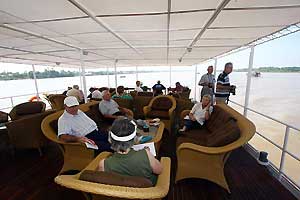 programme.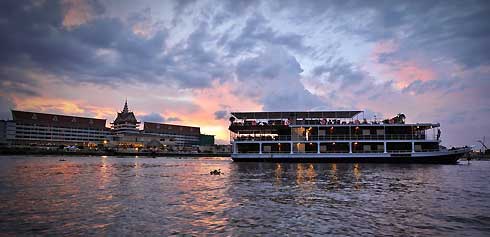
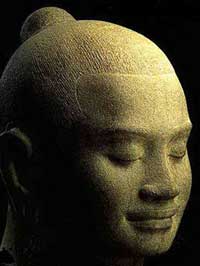 "The Jayavarman" - a floating sanctuary of style and space
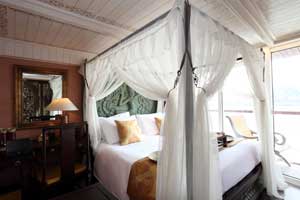
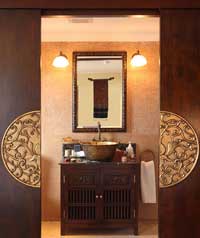
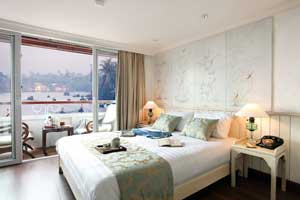 Superior Stateroom - Located on the Main Deck with a balcony, ensuring light to the cabin all day long. Each Superior Stateroom is individually decorated.
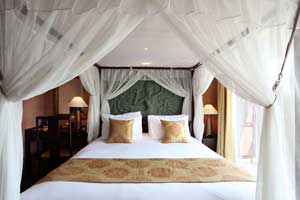 "Bao Dai" Signature Stateroom -
 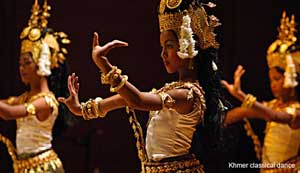 "Club 1930" Funnel Lounge & Bar
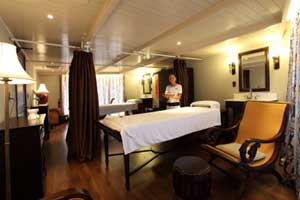 "Apsara" Spa
 Built: 2009
.jpg) Electricity: 220 volts
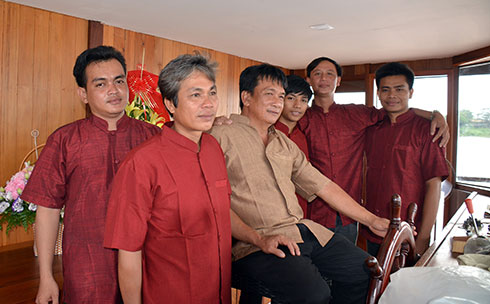
Electricity: 220 volts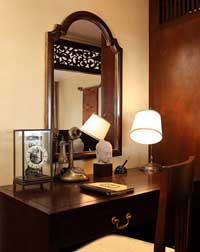 Crew: 40 (Cambodian hotel staff, Vietnamese crew)
 Private French balconies with floor to ceiling sliding doors are a special feature
 On board services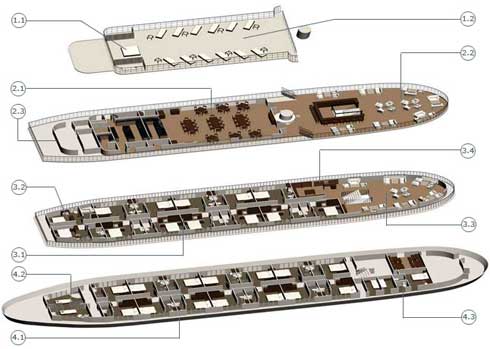
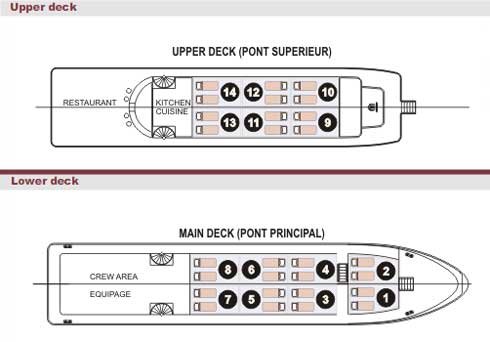
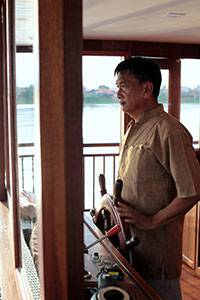 The latest addition to Cambodia’s Mekong river fleet - and also one of the most intimate - the Mekong Dawn is a specially commissioned small cruising boat with 8 luxurious cabins catering to a maximum of 16 passengers.
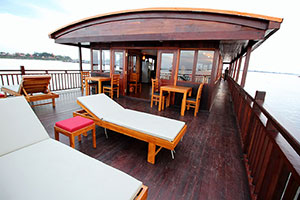 The Mekong Dawn offers cruises between the heart of Cambodia, Phnom Penh and the historic home of the Angkor temples, Siem Reap. She also has a regular nightly cruise from Phnom Penh and returning back, allowing those who do not have time for a 3 day or longer itinerary to ejoy a tranquil night on one of Asia's most charismatic waterways and explore a little of the incredible Tonle Sap and Mekong rivers.
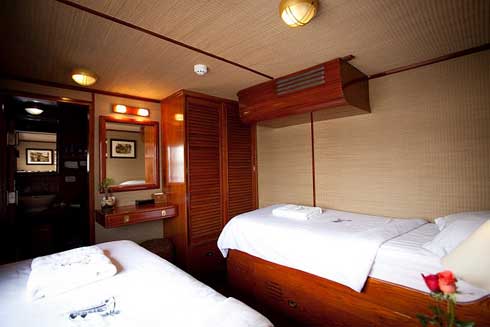
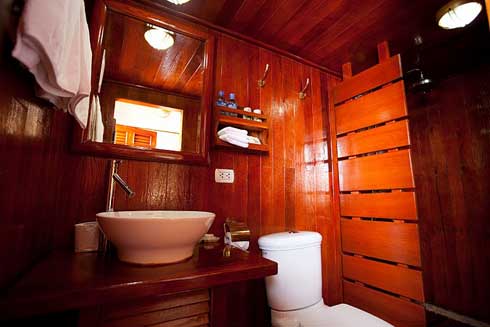
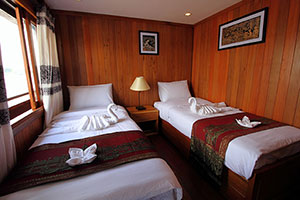 The Cabins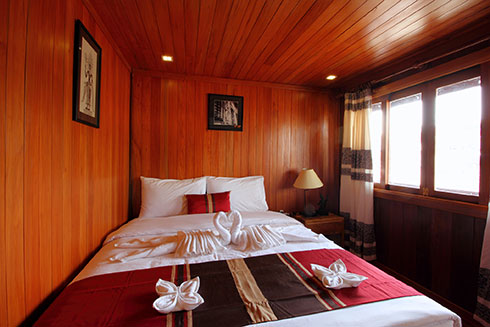
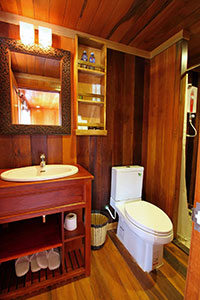 A large double or twin beds (2 cabins can be converted to twins)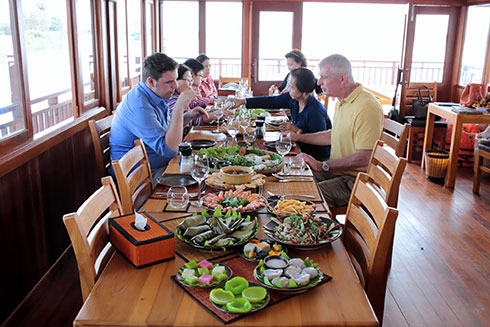
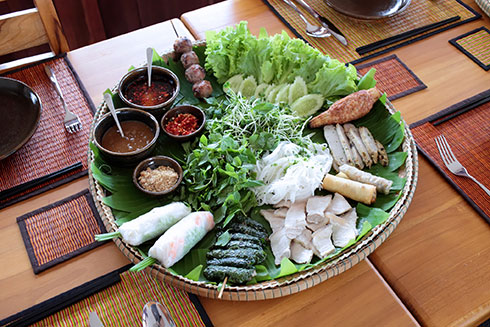
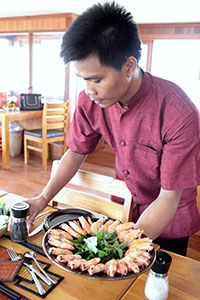 The crew of the Mekong Dawn take their food very seriously. Breakfast, Lunch and Dinner are included in the price you pay.
 Soup
Soup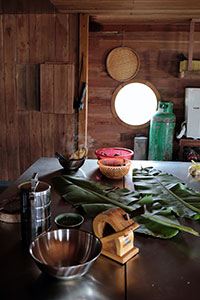 Starter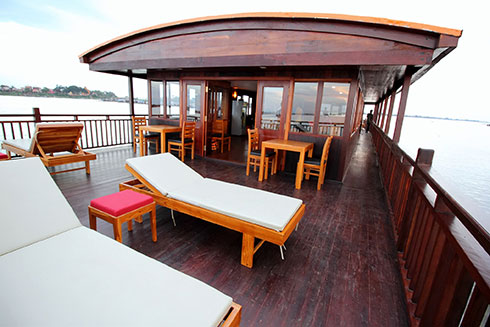
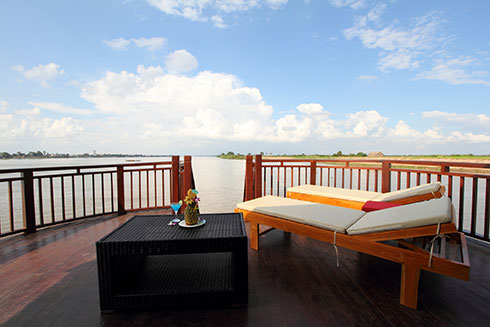
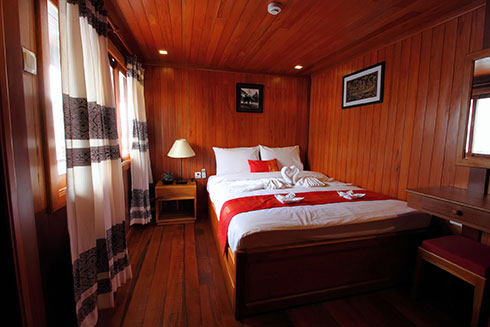
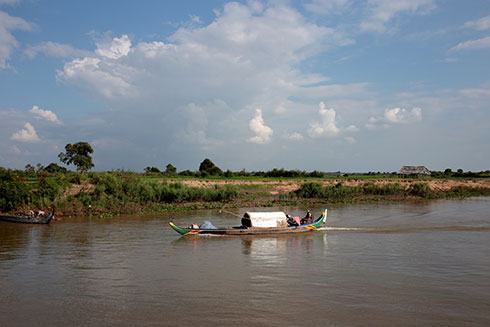
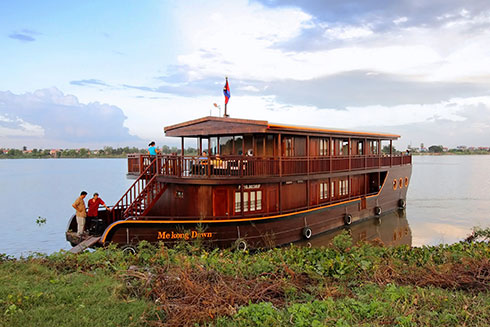
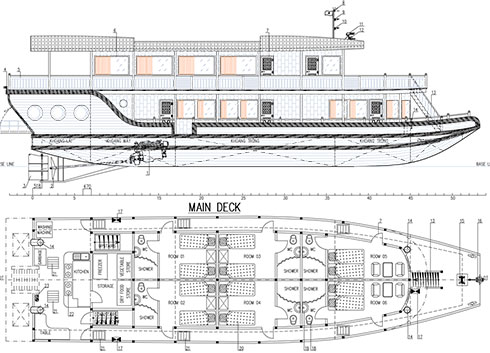
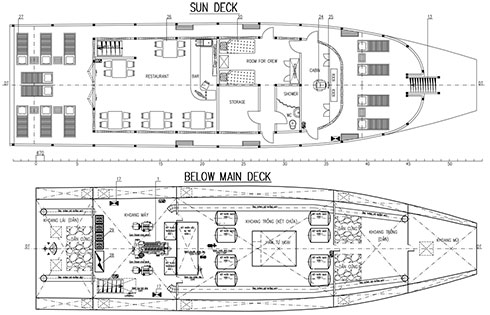
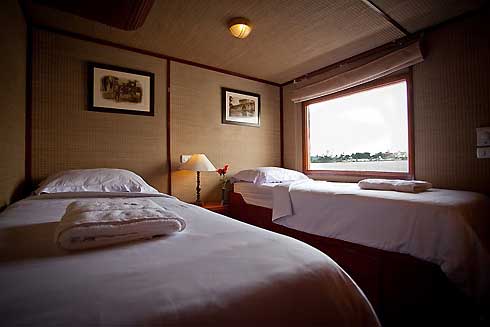
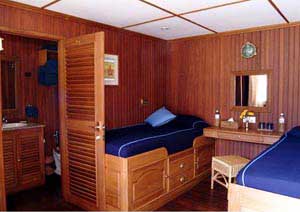 The stateroom is the most celebrated feature of the Pandaw ships. Finished in brass and teak, the main and upper deck rooms are very spacious at 168 square feet (15.6 sqm). Much loved by all our passengers we have ensured that with each ship we build the stateroom remains the same. Cabins do not have mini-bars, satellite TV’s, internet or phones. There is a 24 honesty bar on the sundeck. Pandaw passengers usually want to escape from the tiresome features found in international business hotels.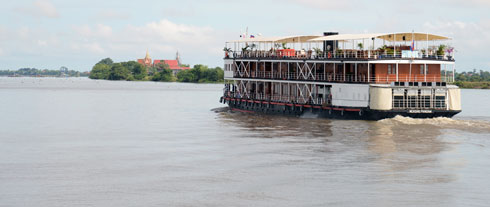
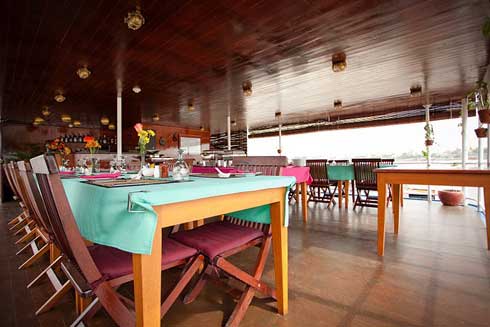
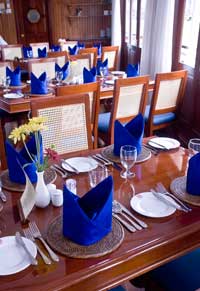 The Pandaw dining rooms are designed to open up along the sides and are only closed at night when the air conditioning is turned on.
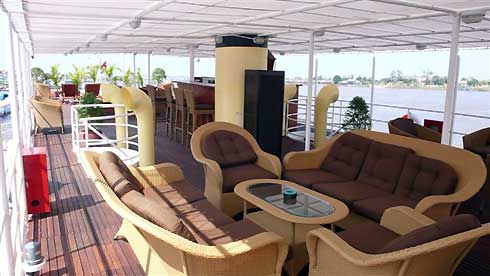
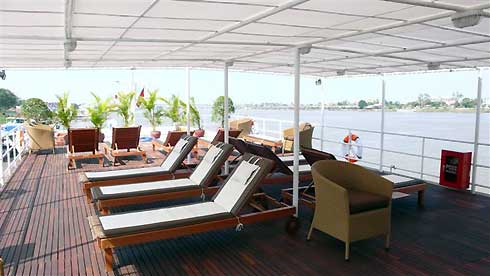
 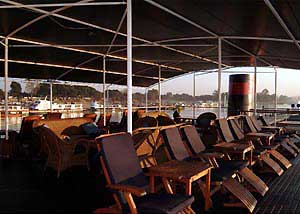 Sailing on a Pandaw is essentially an outdoor experience. Whilst the staterooms are very comfortable and roomy, most passengers prefer to spend their time sitting outside, on the promenade decks or on the vast observation deck above. Unlike other cruise ships every window (except port holes on the lower deck) can be opened.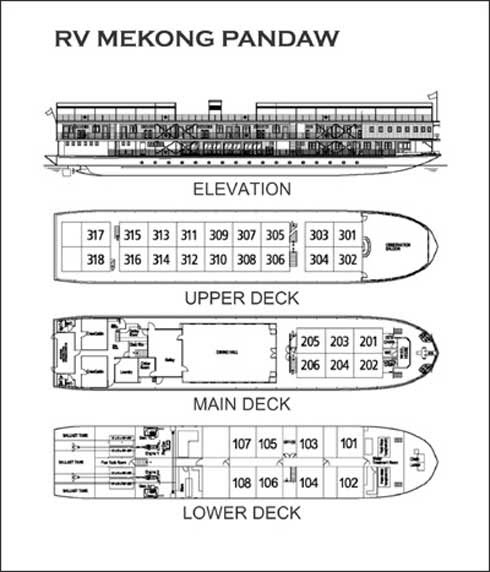
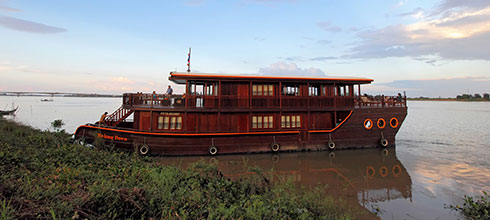
.jpg) Built in traditional style, the Toum Tiou (also sometimes spelled the Toum Teav) was christened in 2002 on the river at Phnom Penh, the first Cambodian cruise boat with international standard accommodation.
Built in traditional style, the Toum Tiou (also sometimes spelled the Toum Teav) was christened in 2002 on the river at Phnom Penh, the first Cambodian cruise boat with international standard accommodation.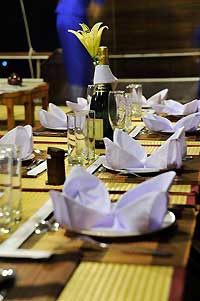 the safety of a steel hull, its low draft makes possible an access to the smallest and remotest of villages.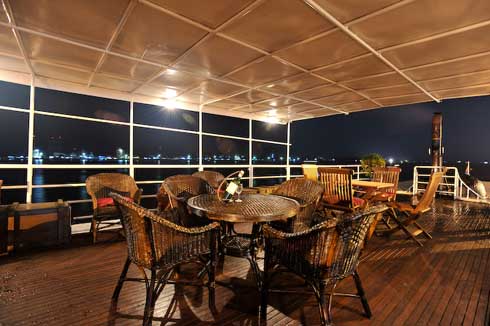
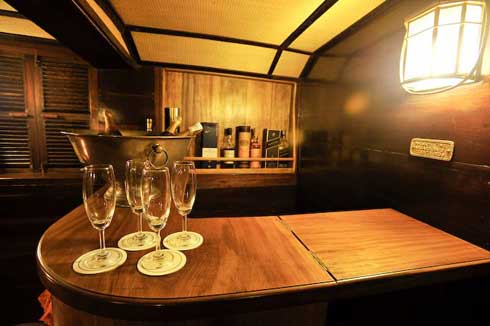
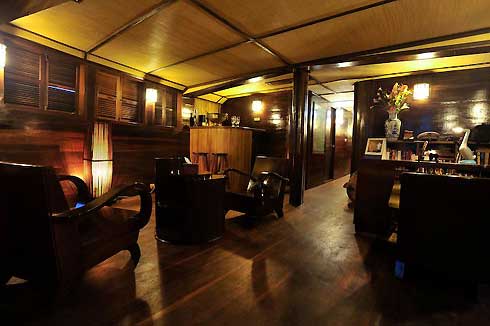
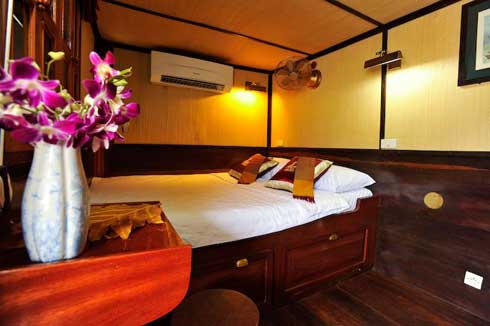
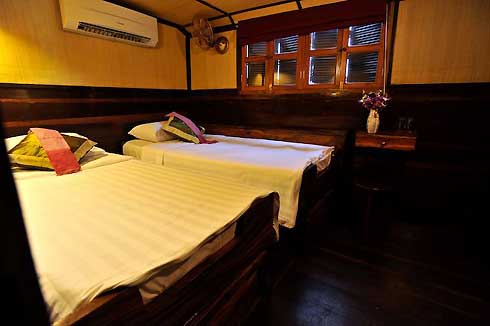
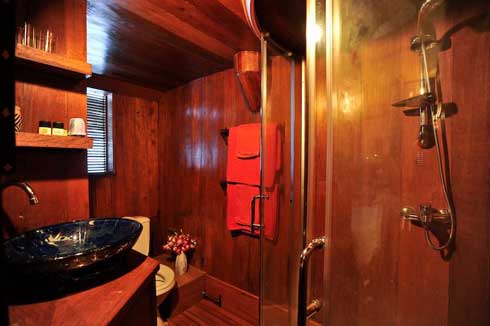
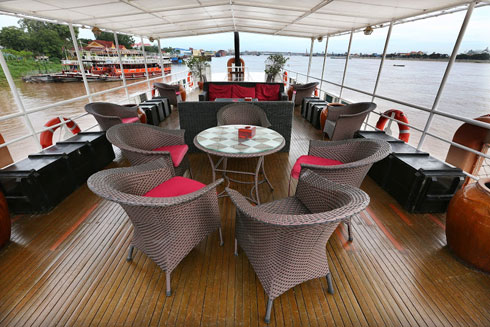
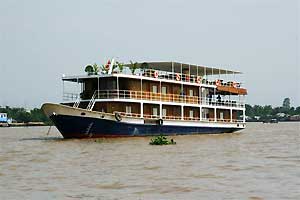 The Toum Tiou II is the latest addition to the fleet, newly built from scratch and launched in late 2009.